Too many site investigations in the Triad stop at bearing capacity and settlement, completely overlooking seismic risk. Greensboro isn't directly over a major fault, but the 2020 Sparta earthquake and 2011 Virginia event reminded everyone that intraplate shaking travels far through old, cold crust. When saturated granular lenses exist within the saprolite or in alluvial pockets along Buffalo and Reedy Fork creeks, even moderate ground motion can trigger cyclic pore pressure buildup. We have seen this missed on warehouse projects near Piedmont Triad International Airport and on multifamily developments east of Highway 29. A proper CPT test provides continuous tip resistance and pore pressure data that standard borings simply cannot deliver. Paired with site-specific groundwater monitoring and fines content from grain-size analysis, we build a defensible liquefaction susceptibility profile that holds up under plan review.
Liquefaction isn't just a West Coast problem. Saturated fine sands in the Piedmont can lose strength under cyclic loading, and ignoring it can be an expensive gamble.
Our approach and scope
Local context
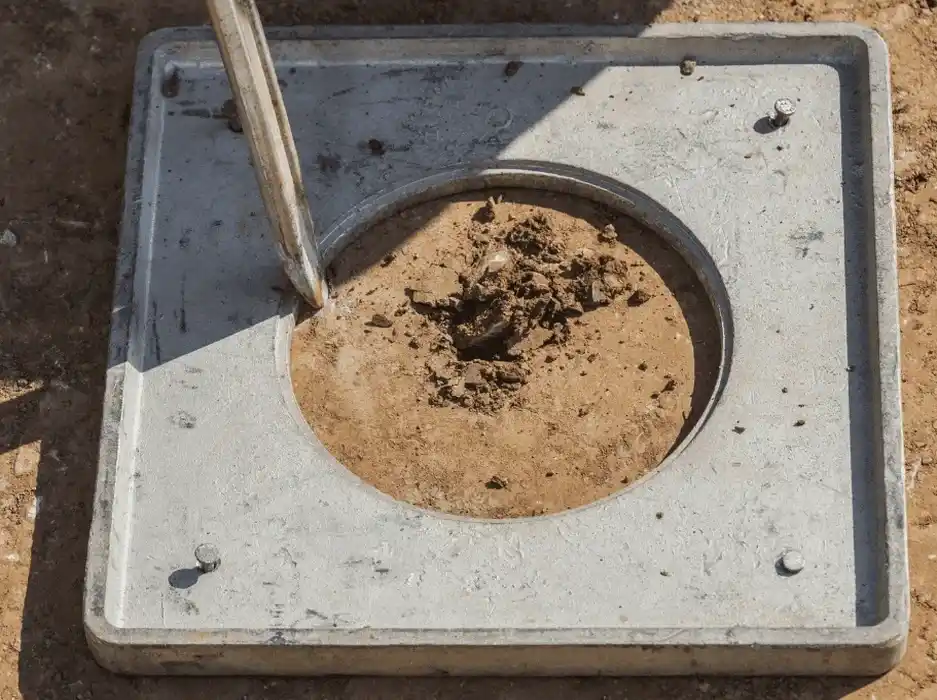
Greensboro's growth since the 1950s has pushed development into low-lying areas that were historically avoided for heavy construction. Old topographic maps show extensive wetlands and natural springs along the North Buffalo Creek corridor, now partially filled and occupied by commercial buildings and mid-rise residential structures. These fills often contain loose, saturated sandy soils of varying thickness, deposited before modern compaction standards. During a seismic event, these layers can develop excess pore pressure rapidly, leading to flow failure or significant settlement that distorts foundations and ruptures utilities. The risk magnifies in structures with shallow footings or lightly reinforced slabs-on-grade, which are common in the region. Even a few inches of differential settlement can render a building unsafe. A thorough soil liquefaction analysis is not an academic exercise here; it's a practical tool for protecting assets in a city where infill development on marginal ground is accelerating.
Regulatory framework
ASCE 7-22 Minimum Design Loads and Associated Criteria for Buildings and Other Structures, IBC 2021 International Building Code, Section 1803.5.12, ASTM D1586 Standard Test Method for Standard Penetration Test (SPT) and Split-Barrel Sampling of Soils, ASTM D2487 Standard Practice for Classification of Soils for Engineering Purposes (Unified Soil Classification System), ASTM D5311 Standard Test Method for Load Controlled Cyclic Triaxial Strength of Soil
Related services
Liquefaction Screening & Simplified Analysis
We apply the Seed-Idriss simplified procedure using corrected SPT N-values and CPT tip resistance to calculate the factor of safety against liquefaction triggering for each soil layer, considering the design earthquake magnitude and groundwater conditions.
Cyclic Laboratory Testing Program
Undisturbed samples recovered from critical zones are tested under cyclic triaxial or cyclic simple shear conditions to measure the cyclic resistance ratio directly, removing the uncertainty inherent in empirical correlations.
Post-Liquefaction Settlement & Lateral Spreading Assessment
We estimate volumetric strain and reconsolidation settlement using Ishihara and Yoshimine (1992) procedures, and evaluate lateral spreading potential on gentle slopes or near free faces such as creek banks and retention ponds.
Ground Improvement Recommendations for Liquefaction Mitigation
Where the analysis indicates unacceptable risk, we design mitigation strategies including vibrocompaction, stone columns, or deep soil mixing, specifying performance criteria such as target post-treatment SPT or CPT values.
Typical parameters
FAQ
Is liquefaction really a concern in Greensboro, given the distance from plate boundaries?
Yes, it is a concern under specific site conditions. The central and eastern United States track record less frequent but potentially impactful intraplate earthquakes that propagate efficiently through the crust. In Greensboro, the risk is concentrated in saturated, loose granular deposits found in alluvial terraces and filled-in stream valleys. If your site has a shallow water table and sandy soils, a screening analysis is prudent and often required by the IBC for Seismic Design Category C or higher.
What is the typical cost range for a comprehensive soil liquefaction analysis on a commercial site in Greensboro?
A comprehensive soil liquefaction analysis that includes field investigation, index testing, cyclic laboratory testing, and a detailed engineering report typically ranges from US$2,840 to US$3,770. The final cost depends on the number of borings or CPT soundings, the depth of investigation, and the number of cyclic tests required to characterize the critical layers.
How do you collect undisturbed samples in sandy soils without disturbing the fabric?
Obtaining high-quality samples in potentially liquefiable sands is challenging but essential. We use thin-walled Shelby tubes advanced with a fixed-piston sampler in finer sands and silts, and in some cases employ ground freezing or gel-push technology for very clean sands. The sampling procedure follows ASTM D1587 guidelines, and the tubes are transported and stored upright to minimize disturbance before extrusion in our lab.