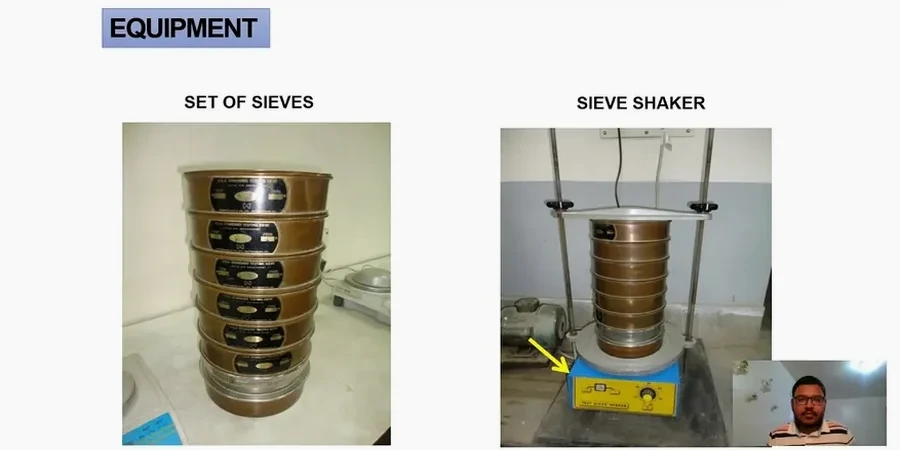
Greensboro’s expansion since the textile boom of the 1890s left a patchwork of fill over deeply weathered saprolite. The transition from Cecil sandy loam near Lake Brandt to the finer-grained Iredell series east of downtown means two boreholes 500 feet apart can yield completely different gradation curves. When a developer on West Wendover Avenue called us after three slab-on-grade failures, the culprit was not expansive clay but gap-graded residual micaceous silt that standard field logging missed. A full grain size analysis combining mechanical sieving through #200 with hydrometer sedimentation, following ASTM D422 and classified under ASTM D2487, identified the missing intermediate fraction and allowed proper subgrade modification. Partnering with a local CPT testing crew gave us continuous soil behavior type profiles before sampling, reducing lab turnaround for the contractor by four days.
A gradation curve without hydrometer data in Piedmont saprolite misses 40% of the particle distribution and leads to incorrect USCS classification.
Our approach and scope
Local context
A five-story mixed-use structure on South Elm Street hit a two-month delay because the earthwork submittal relied on a cheap gradation report from a lab that skipped the hydrometer. The report classified the material as silty sand (SM), but the actual fines fraction was high-plasticity clay from a buried paleosol horizon at 18 feet. When the structural fill was placed and compacted, post-rain saturation triggered differential heave across the mat foundation. We re-ran the full ASTM D422 procedure with hydrometer on undisturbed Shelby tube samples, corrected the USCS designation to fat clay (CH), and the geotechnical engineer revised the undercut depth from 3 to 7 feet. In Greensboro’s Triassic basin sediments, mistaking a CL for an ML on a gradation-only basis is the most expensive shortcut we see. We also check for mica content under a stereomicroscope because abundant muscovite in the sand fraction inflates void ratio and reduces compacted density—something the particle-size curve alone will not reveal.
Regulatory framework
ASTM D422 Standard Test Method for Particle-Size Analysis of Soils, ASTM D2487 Standard Practice for Classification of Soils for Engineering Purposes (Unified Soil Classification System), ASTM D1140 Standard Test Methods for Determining the Amount of Material Finer than 75-µm (No. 200) Sieve, AASHTO T 88 Particle Size Analysis of Soils, IBC Chapter 18 (Soils and Foundations)
Related services
Combined sieve and hydrometer (ASTM D422)
Full particle-size distribution from gravel to clay fraction. Includes sample preparation, mechanical sieve shaking, hydrometer sedimentation with dispersant, moisture content, and a complete report with gradation curve, Cu/Cc, and USCS symbol per ASTM D2487. We process native Piedmont residual soils, Triassic basin sediments, and engineered fill.
Gradation for filter and drainage design
Targeted analysis for Terzaghi filter criteria and drainage aggregate compliance. We run wash-sieve on clean stone (ASTM C136) and hydrometer on filter sand to verify D15 and D85 ratios. Used routinely for retaining wall backdrains and underdrain design in Greensboro's commercial developments.
Typical parameters
FAQ
What is the typical cost of a grain size analysis with hydrometer in Greensboro?
A combined sieve and hydrometer test per ASTM D422 typically runs between US$100 and US$210 per sample, depending on whether we are testing a single point from a bulk bag or multiple depths from a Shelby tube. Expedited 48-hour turnaround adds a small surcharge. For projects needing five or more samples, we apply a reduced unit rate.
Why is the hydrometer step necessary for Greensboro's residual soils?
Piedmont saprolite often contains 30 to 60 percent silt and clay-sized particles that control drainage, frost susceptibility, and compaction behavior. Mechanical sieving stops at the No. 200 sieve; the hydrometer sedimentation, based on Stokes’ law, separates silt from clay and gives the D10 needed for Hazen permeability estimates. Without it, the USCS classification can shift from a silt (ML) to a lean clay (CL) or vice versa, directly affecting foundation design parameters.
How long does a complete grain size test take in your lab?
Standard turnaround is three to four working days from sample receipt. The hydrometer phase alone requires a 24-hour sedimentation period with readings at specified intervals. We can deliver a preliminary sieve-only curve within 24 hours if the contractor needs immediate field feedback on the coarse fraction, but the final USCS designation always waits for the full hydrometer data.